Bungalow Farm
New Eco House & Rewilding Strategy
-
Location: Cretingham, Suffolk
Project status: Completed (Click here for planning application documents and drawings)
CGI Collaboration: @Jms.lwlystudio
-
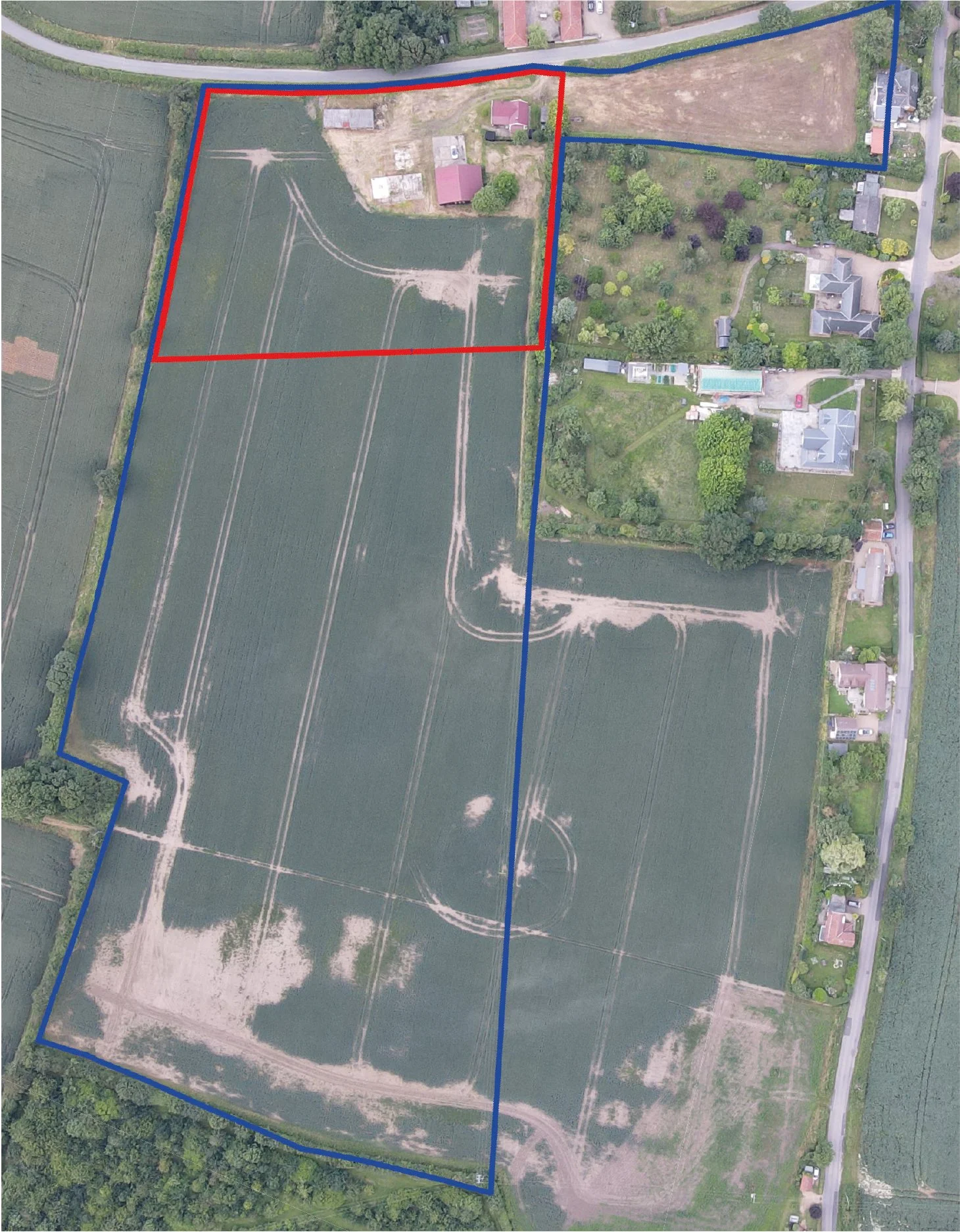
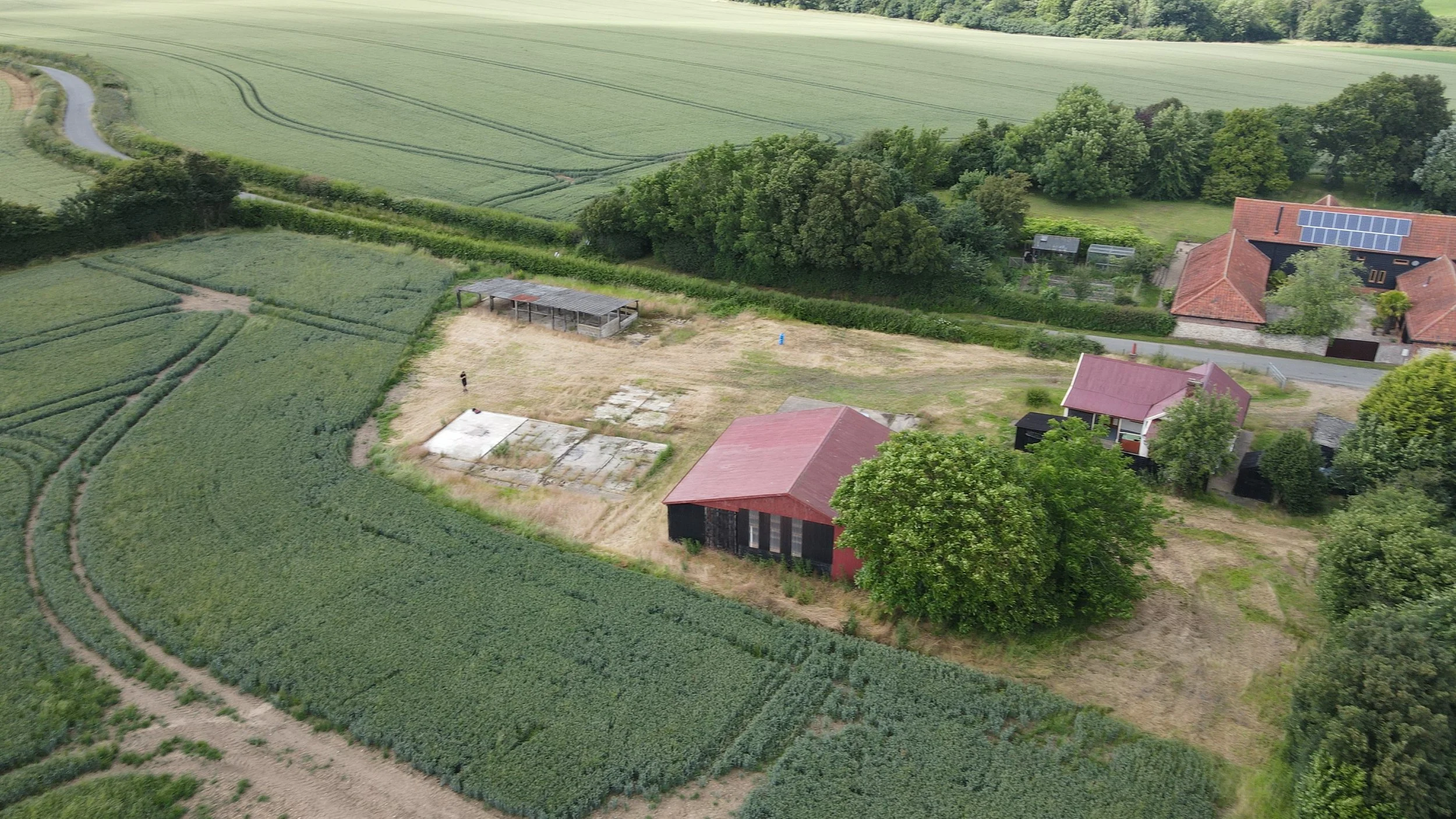
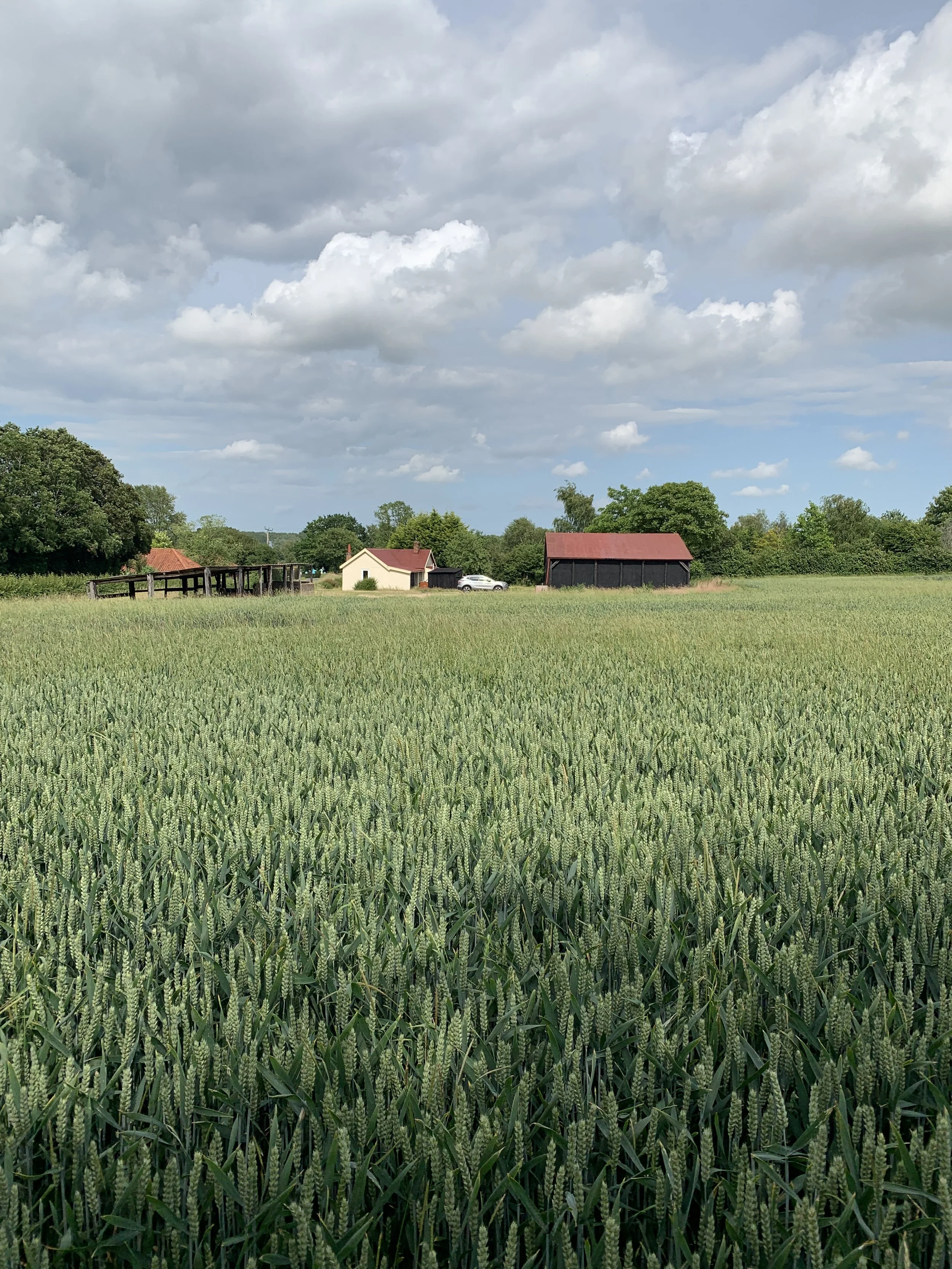
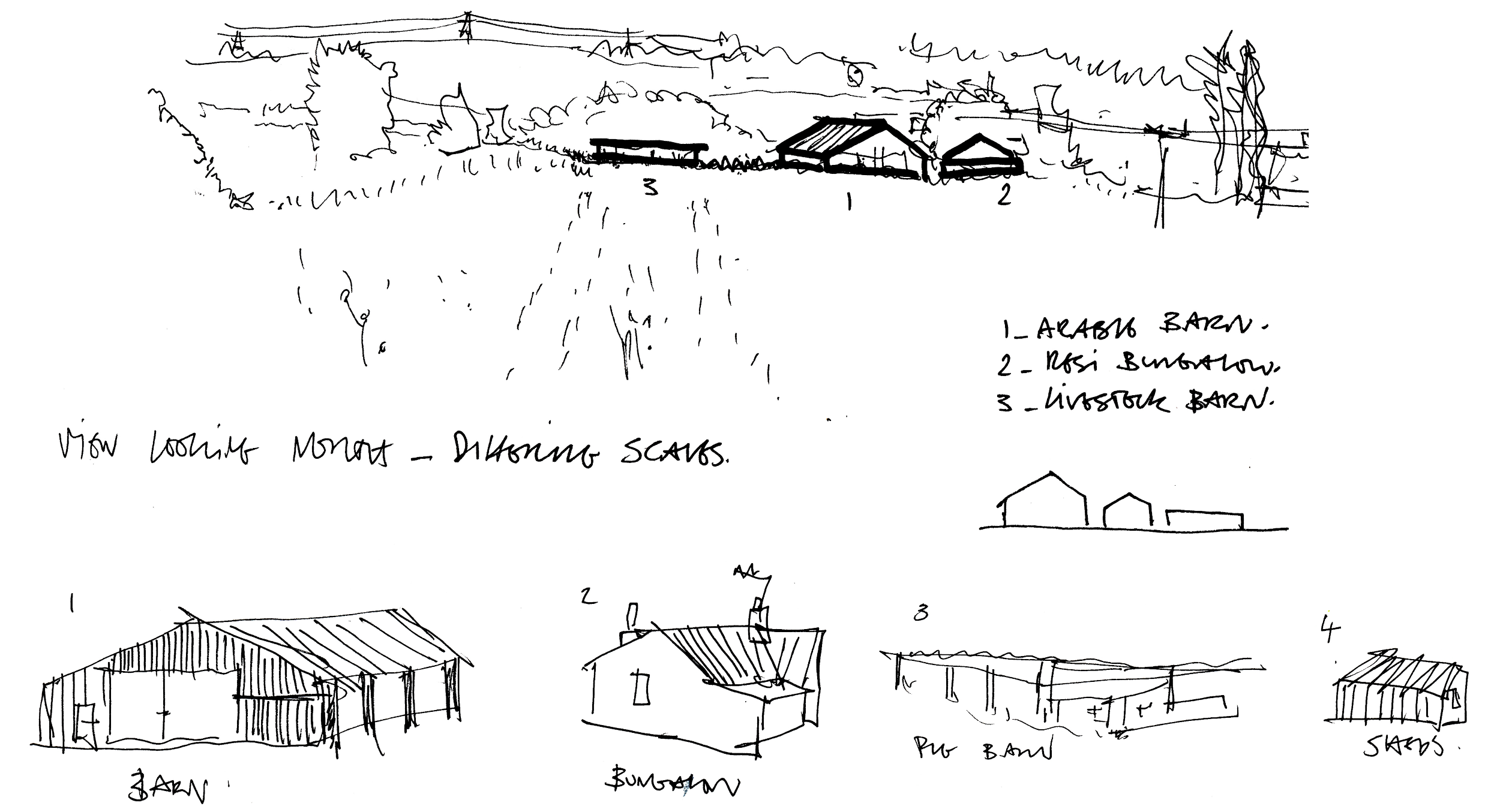
Fen Studio Architects were appointed in 2021 to design a semi off-grid family home and to develop a rewilding strategy for the owners of the recently acquired 11-acre Bungalow Farm site in Cretingham, Suffolwhy is thsk. The site contained three existing structures of differing uses and scales: an agricultural barn, a residential bungalow, and a dilapidated piggery structure.
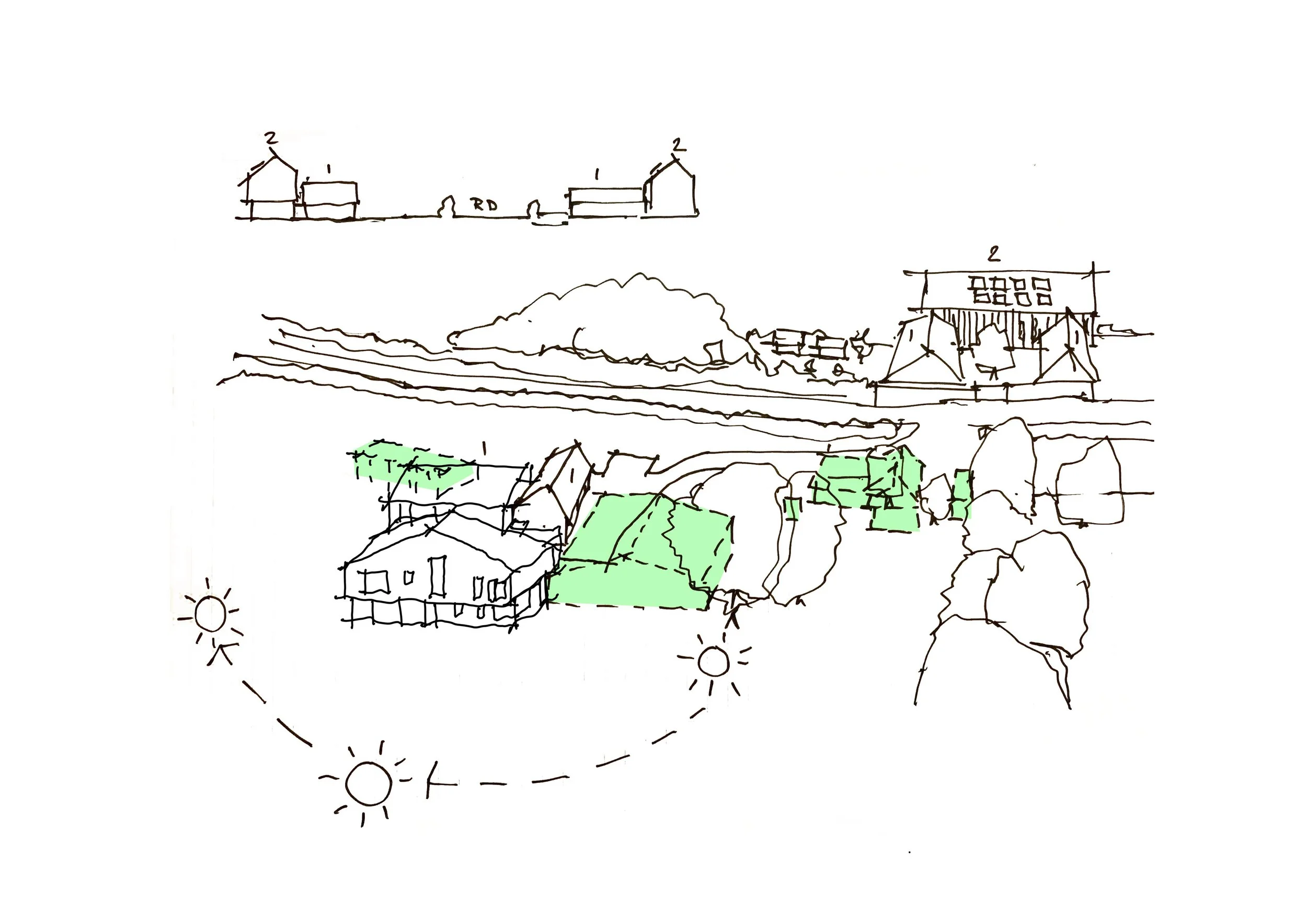
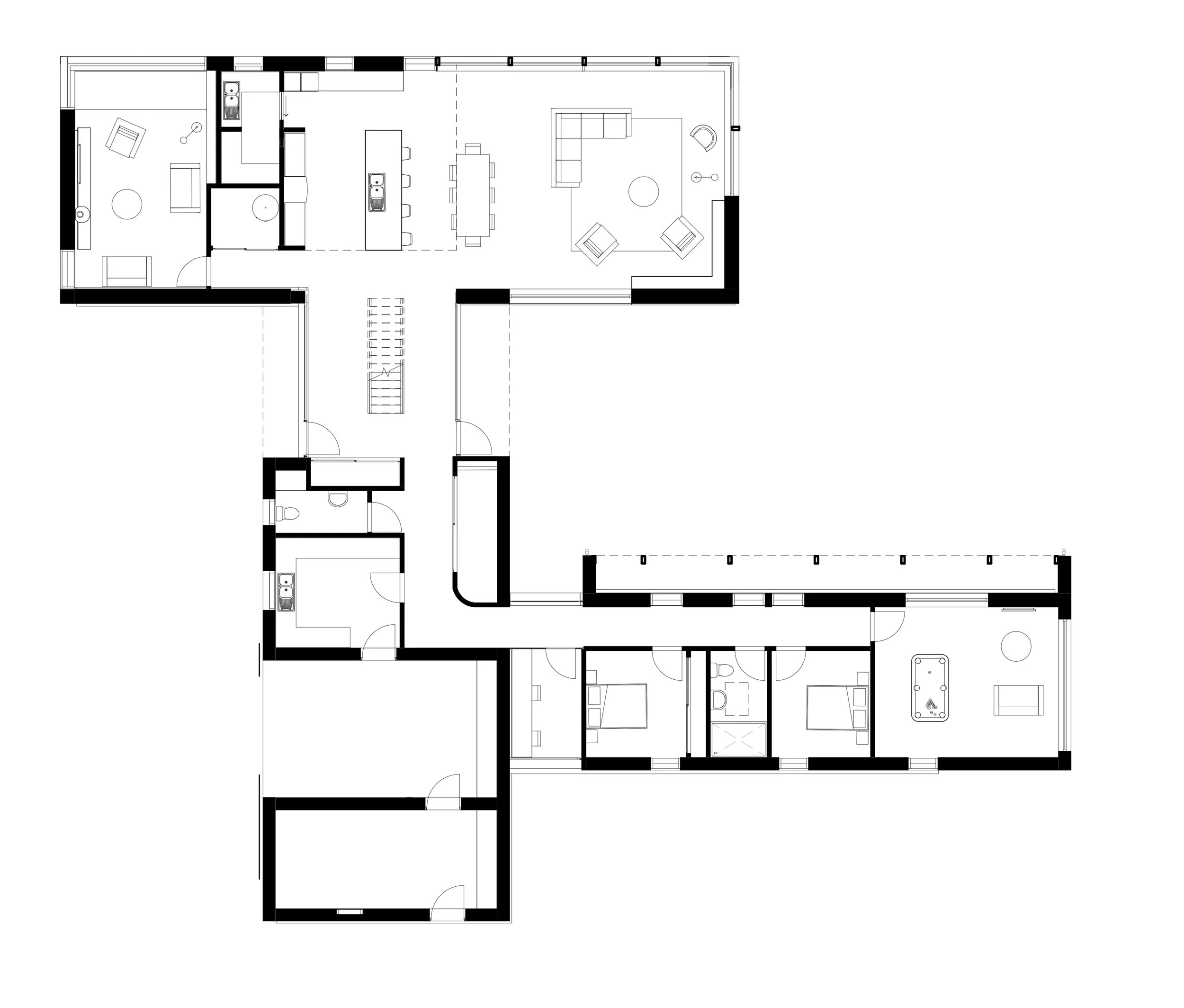
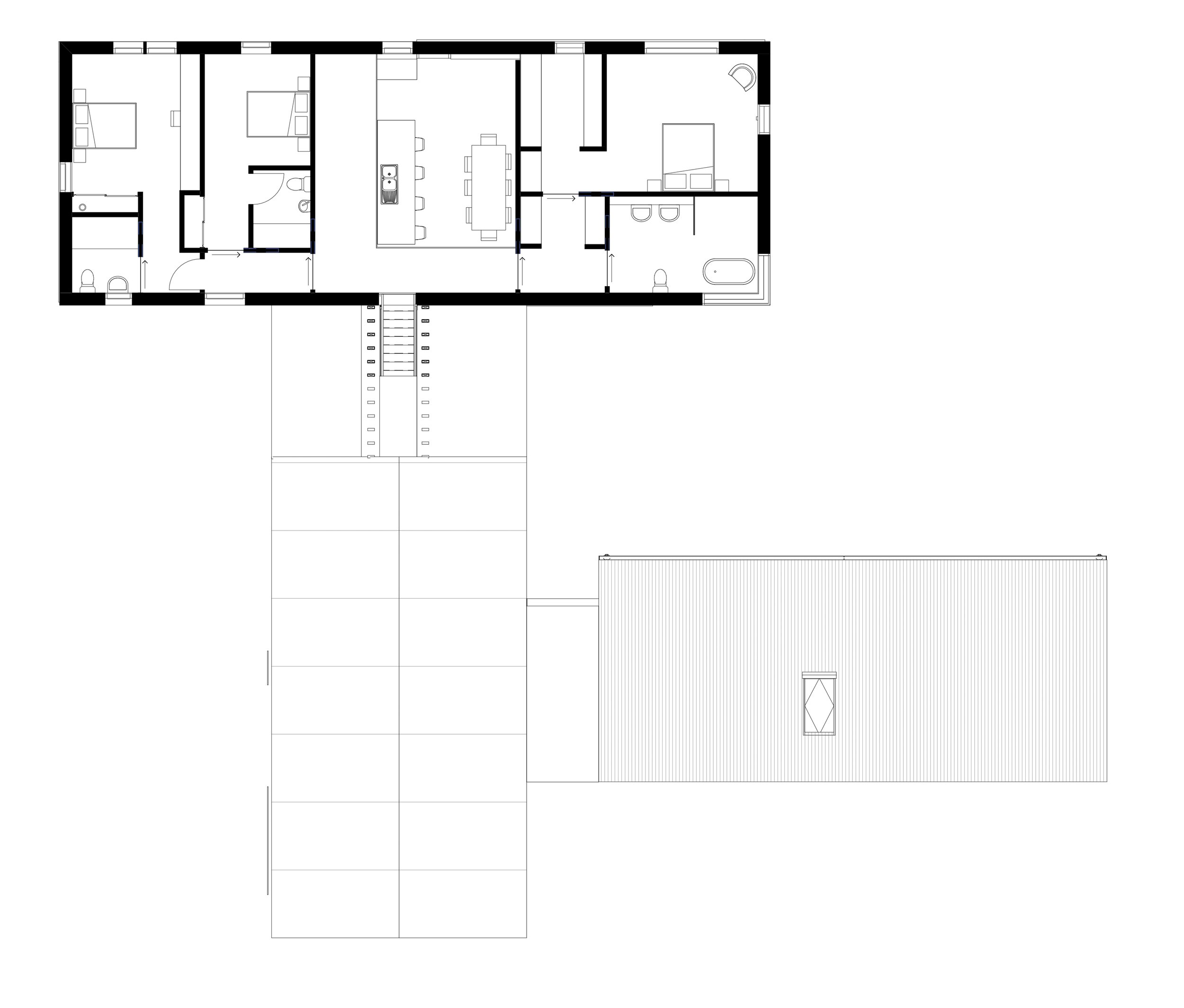
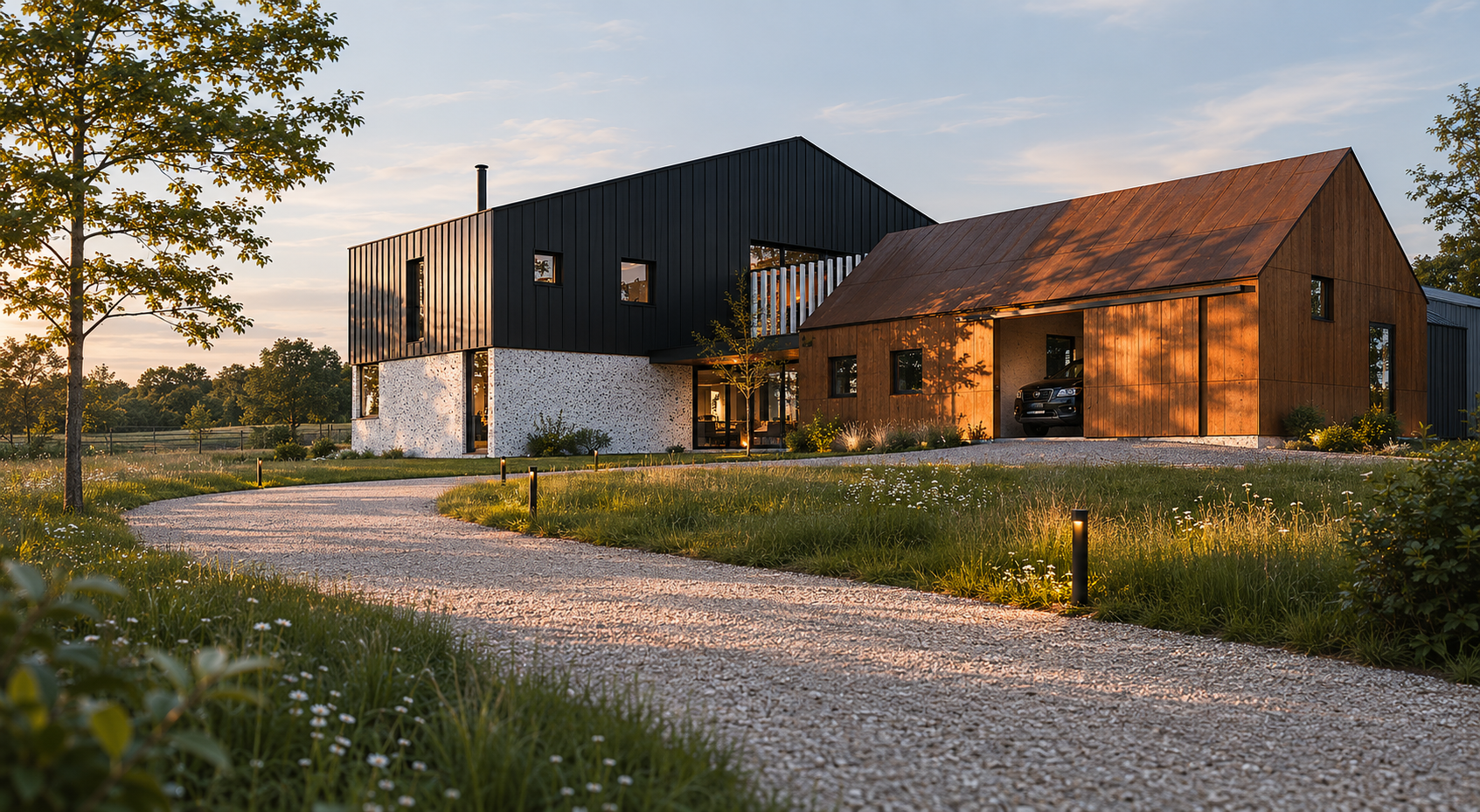
Located within the Suffolk countryside and outside of a settlement boundary, the proposal sought to replace the existing bungalow while allowing the remainder of the former farmland to be rewilded and returned to nature. The design approach aimed to tell the story of the site through form and materiality, referencing the three existing buildings by hypothetically ‘pinching’ them together to create a new composition of distinct forms connected by permeable linking elements.
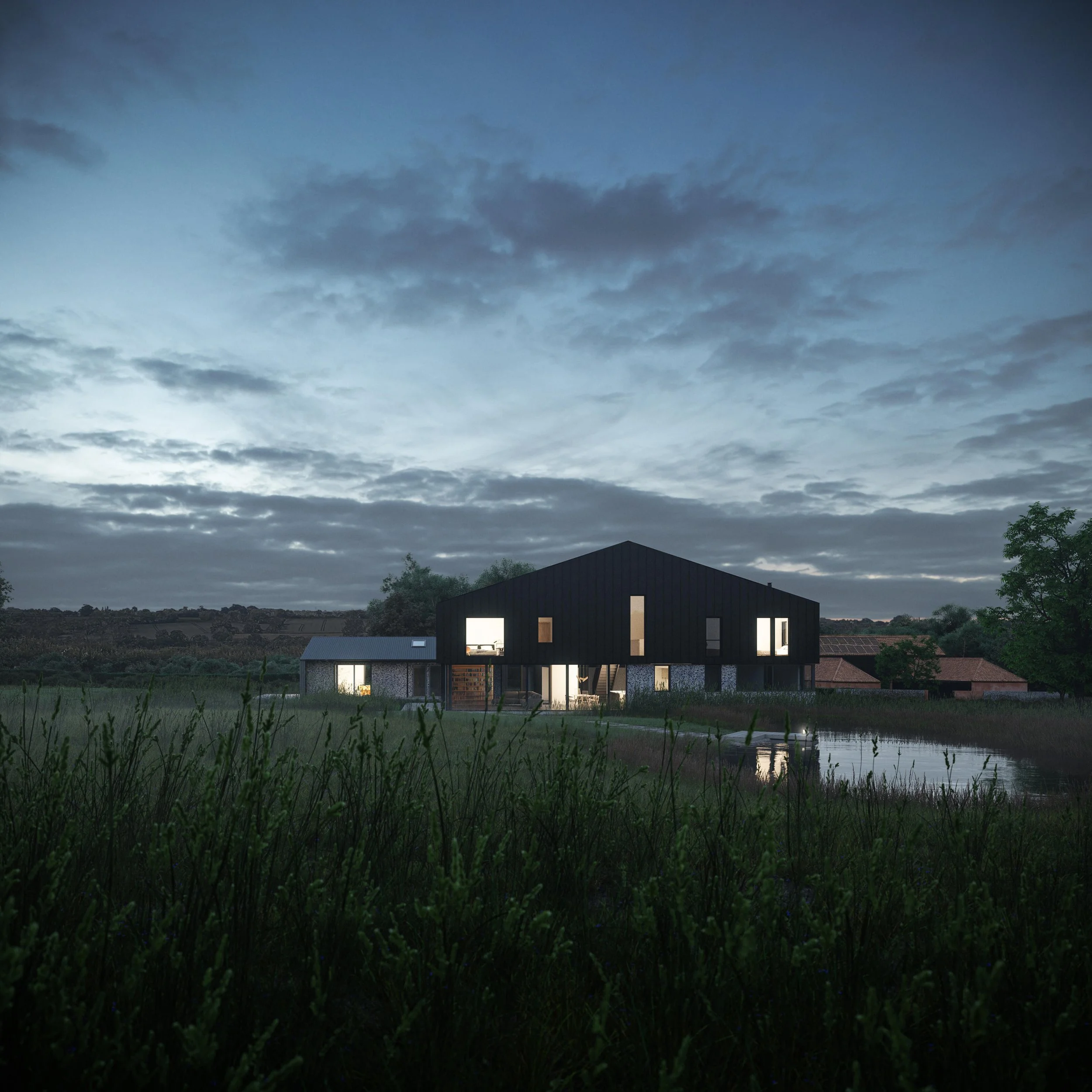
The proposal is orientated in relation to the positions of each existing structure, while being carefully shifted westward to maximise the south-facing aspect, capture distant countryside views, and create a more private courtyard space within an otherwise open landscape. The siting strategy also allows a pair of mature walnut trees, currently constrained by the existing barn, to become a central feature within the wider ecological vision for the site.
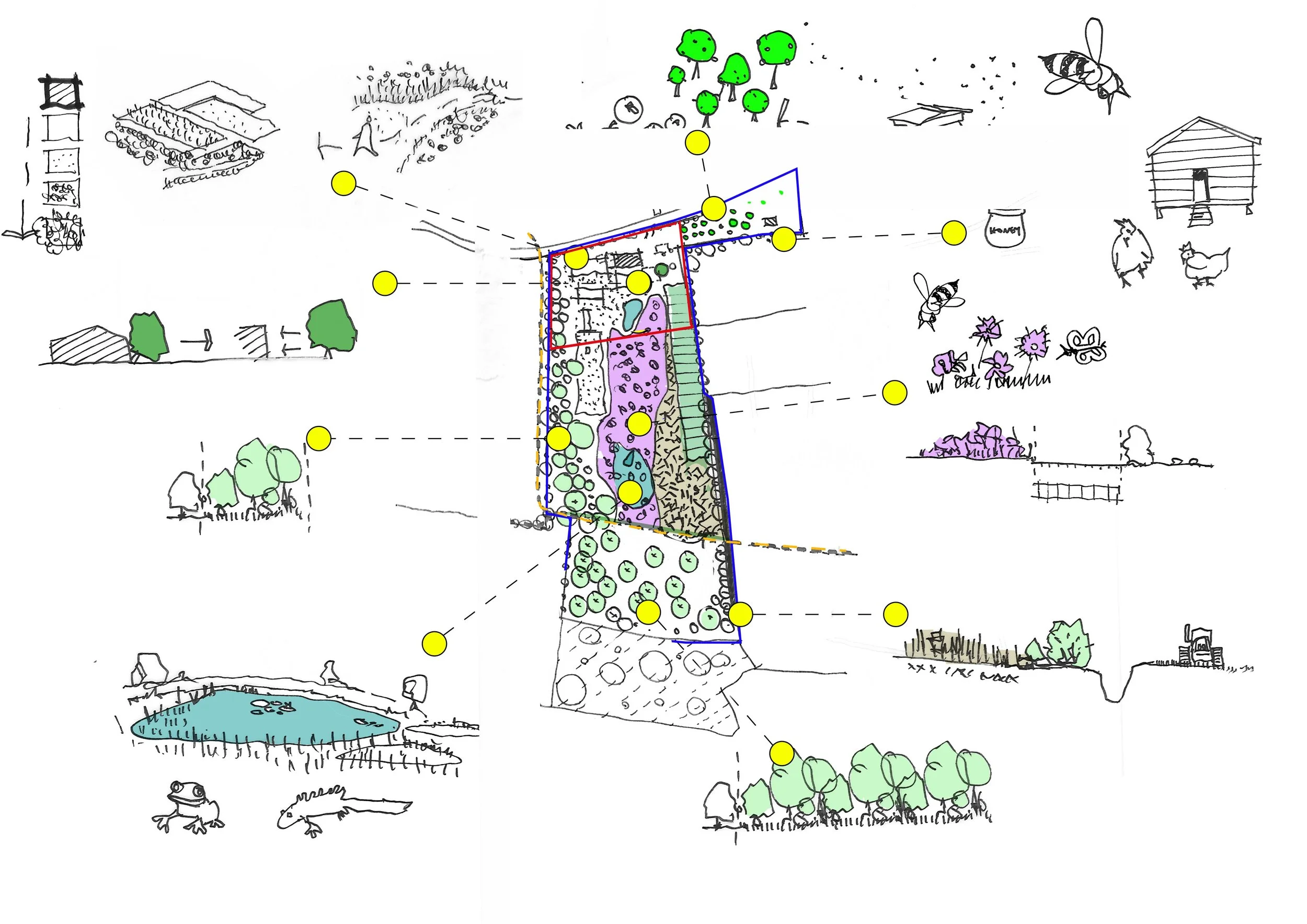
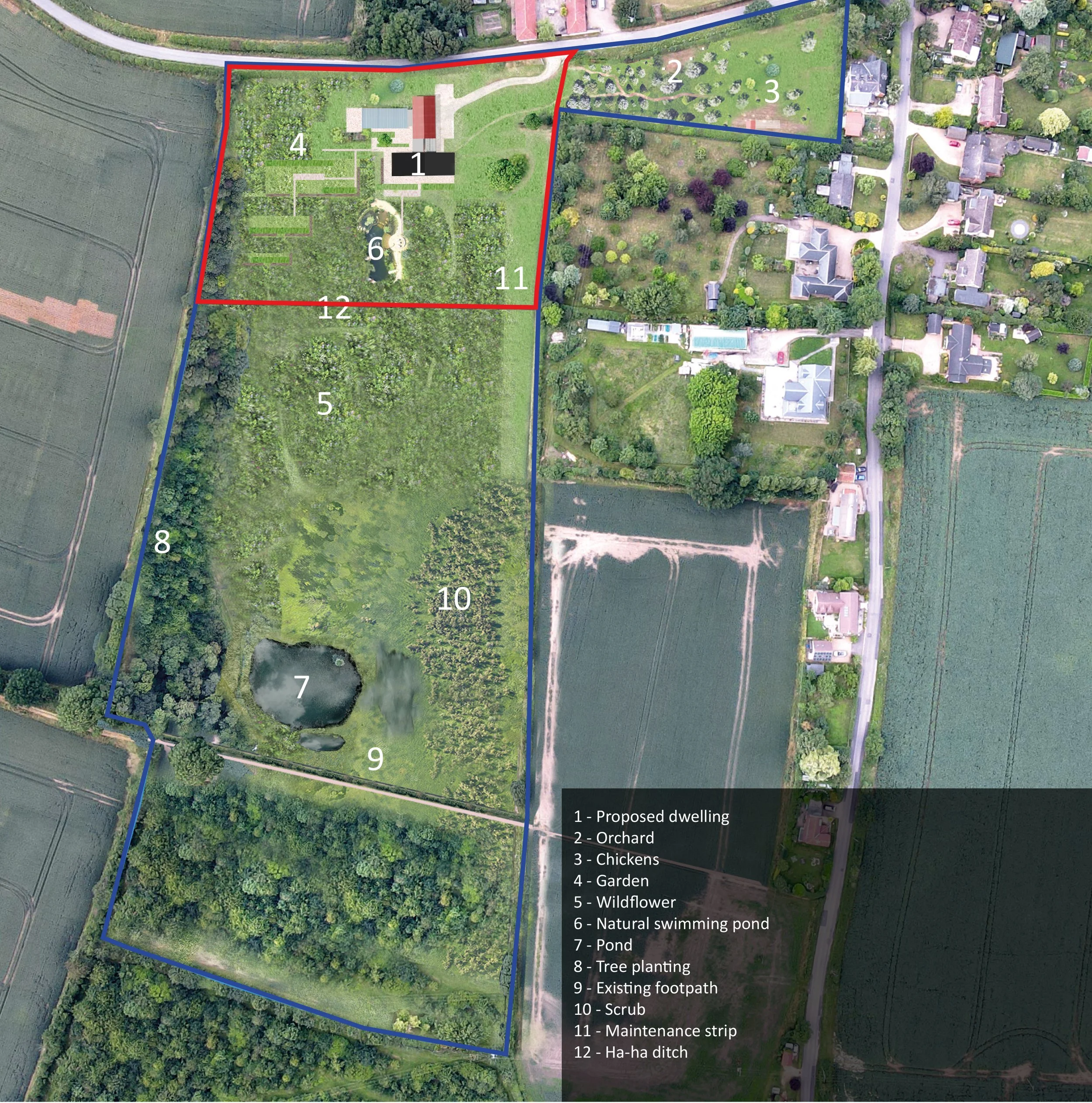
The landscape and biodiversity strategy was developed to create a transition from more formal domestic spaces near the dwelling into increasingly wild and natural habitats across the remainder of the site. The proposal includes an orchard, kitchen garden, natural swimming pond and private courtyard planting, gradually giving way to wildflower meadow, scrubland, wetland areas and substantial native boundary planting. To reduce the nutrient-rich topsoil created through decades of intensive farming, a specific mix of hardy grasses was proposed to suppress weed growth and allow nutrient levels to gradually reduce over time, enabling native wildflower species to establish successfully.
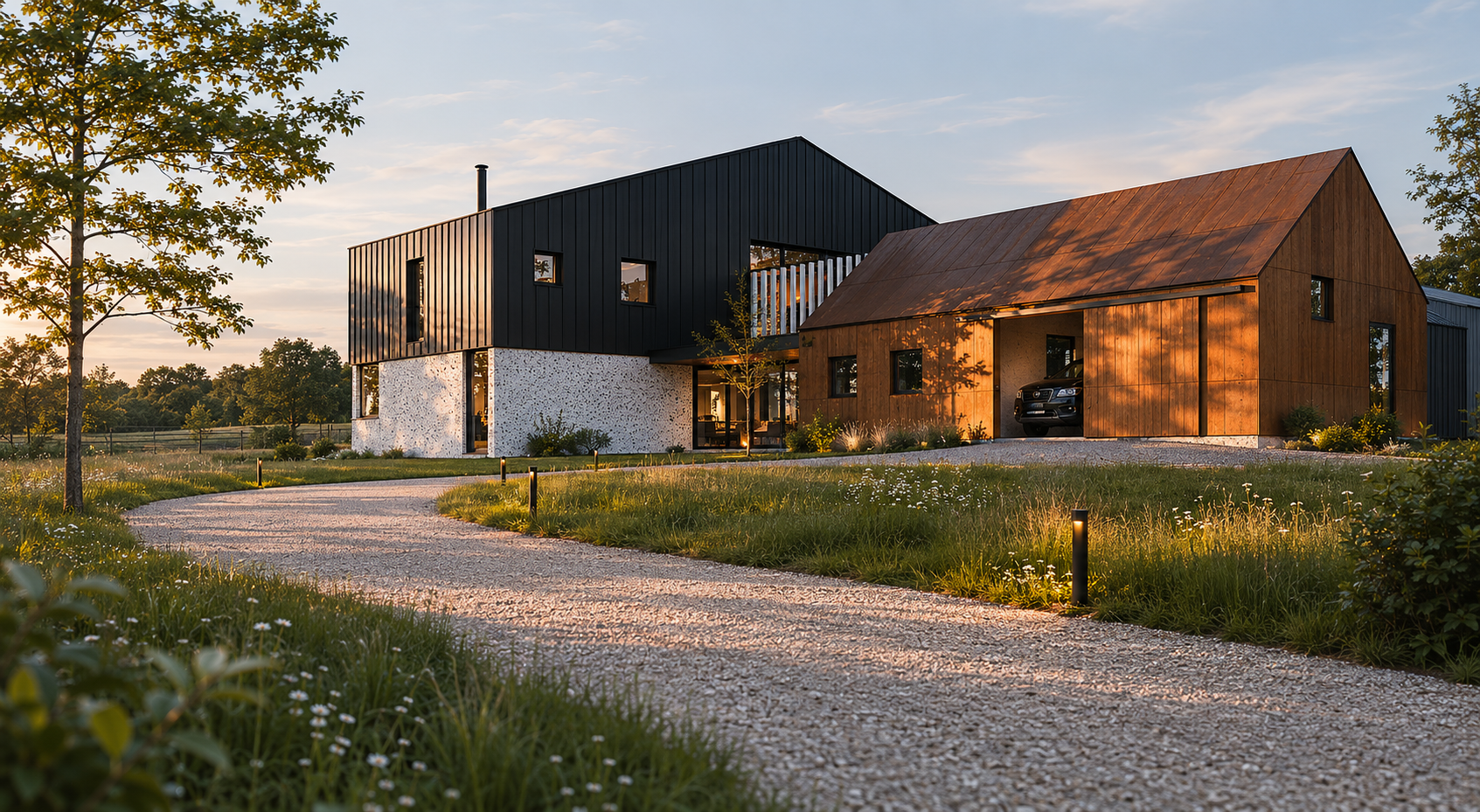
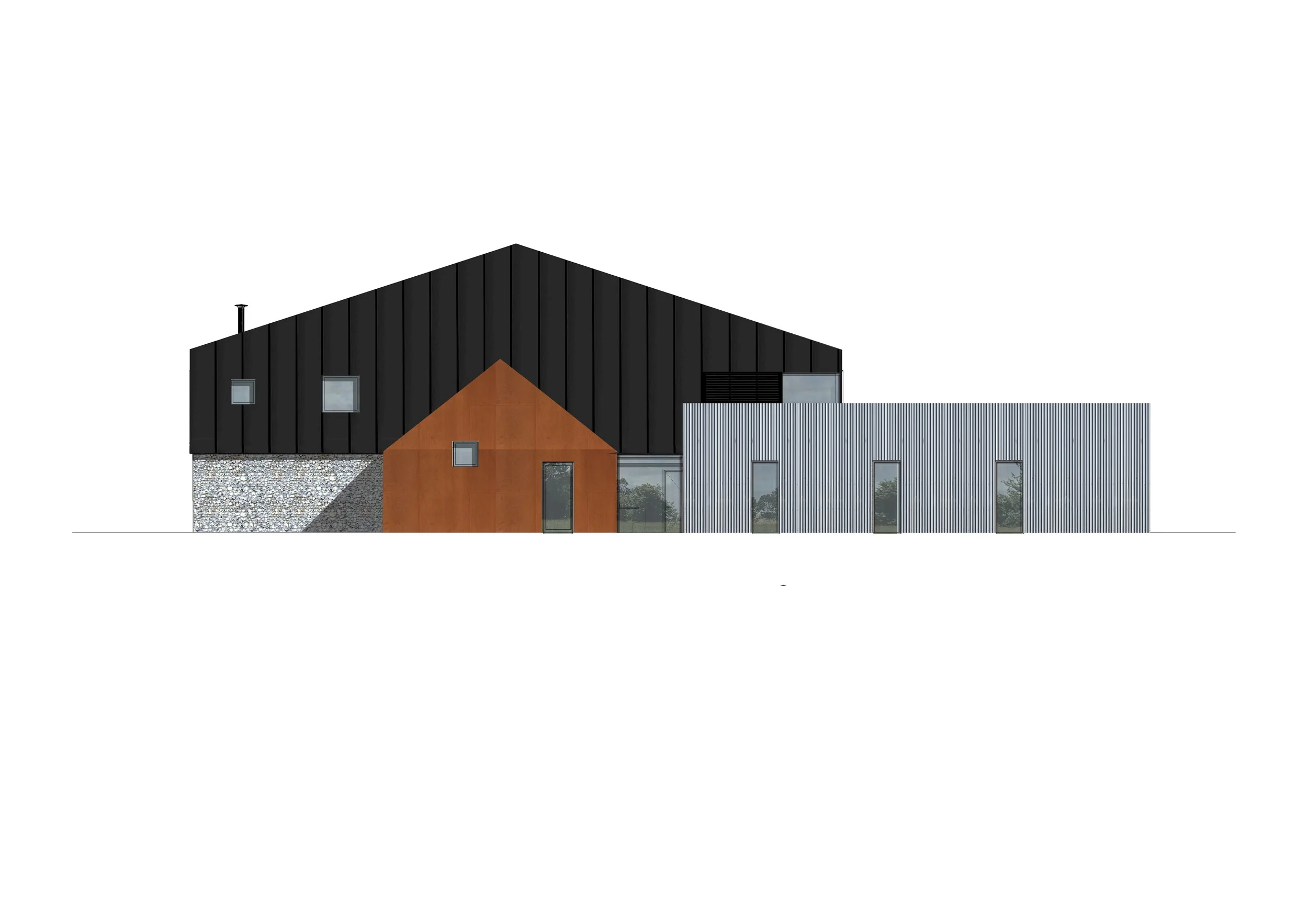
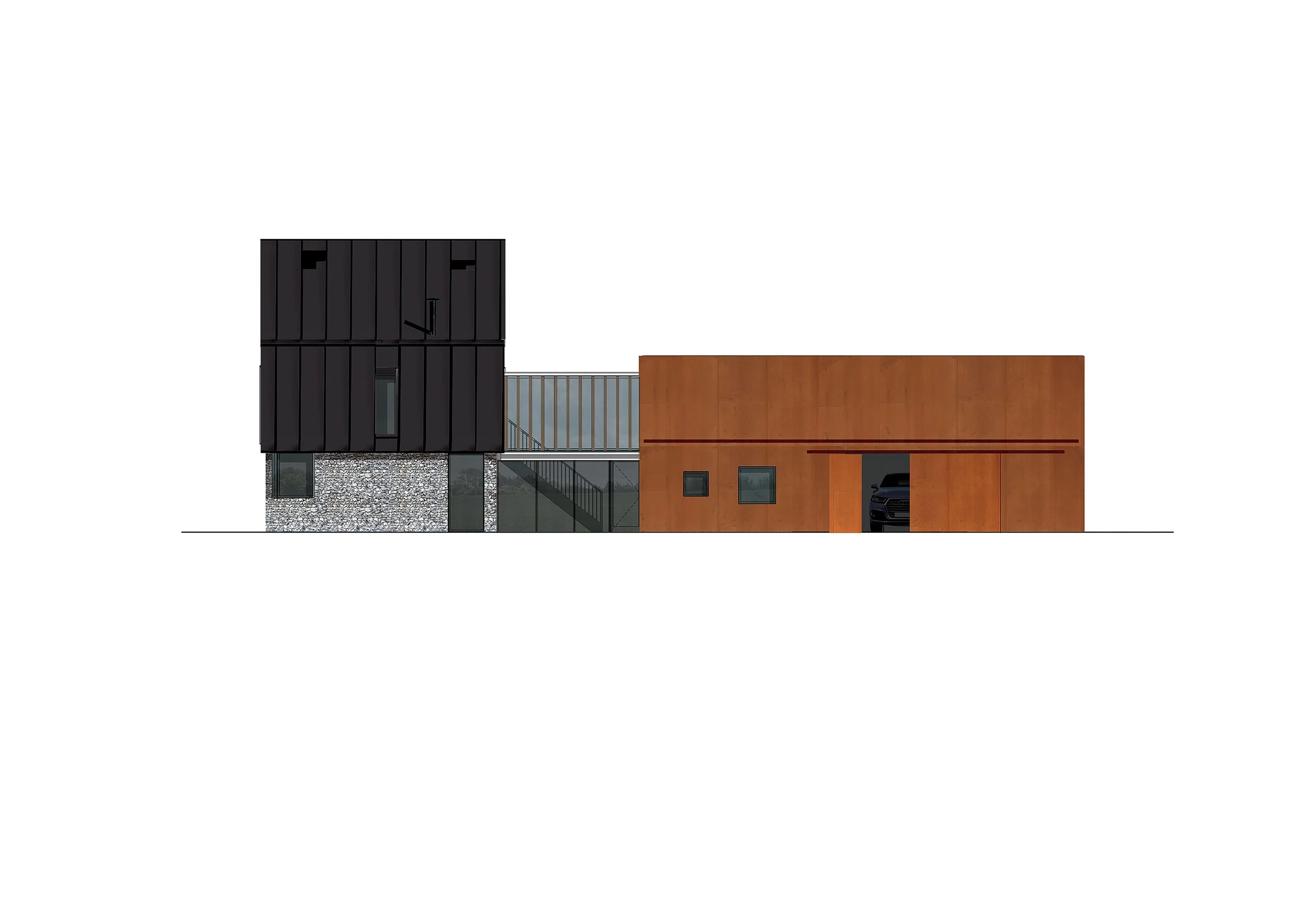
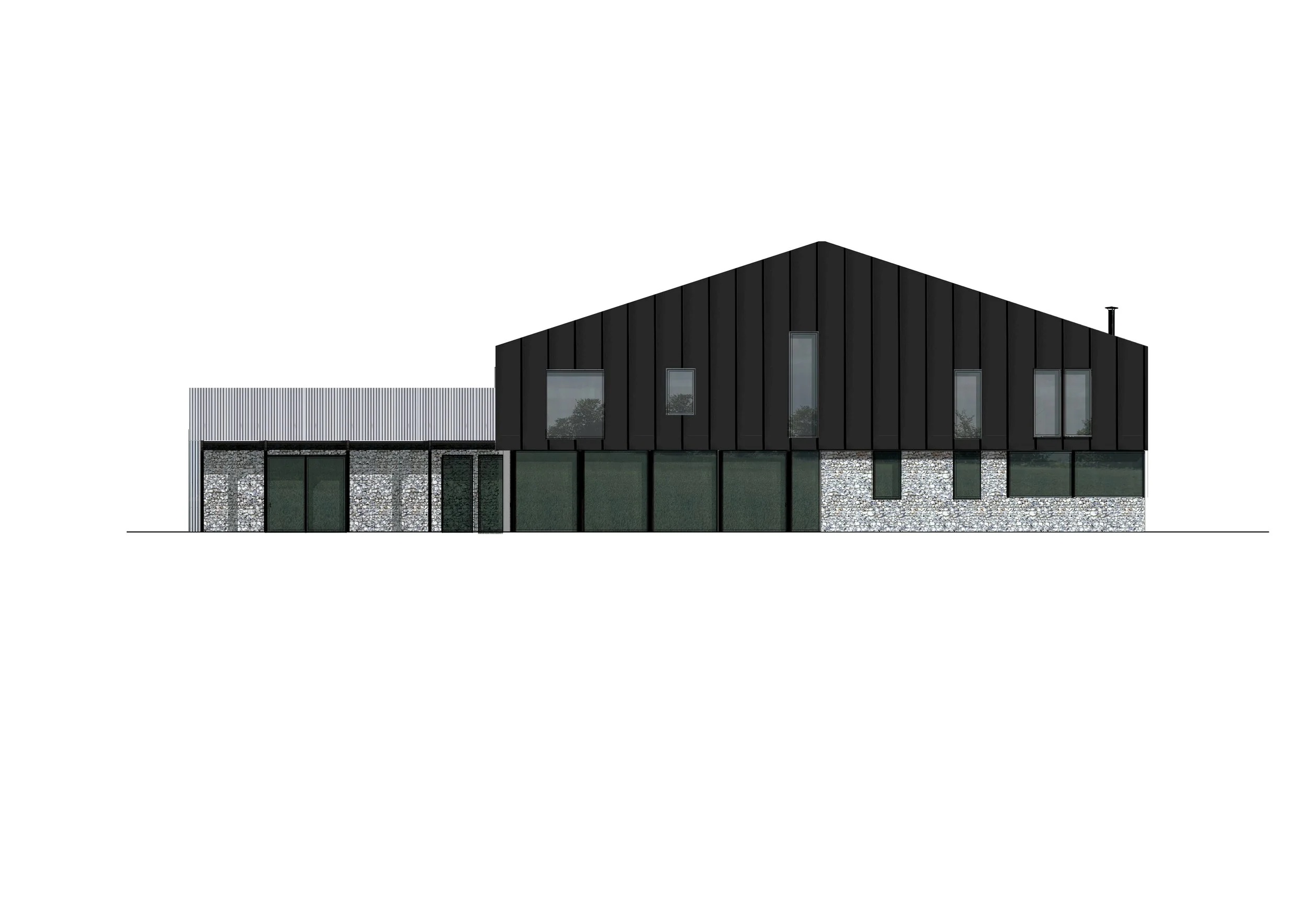
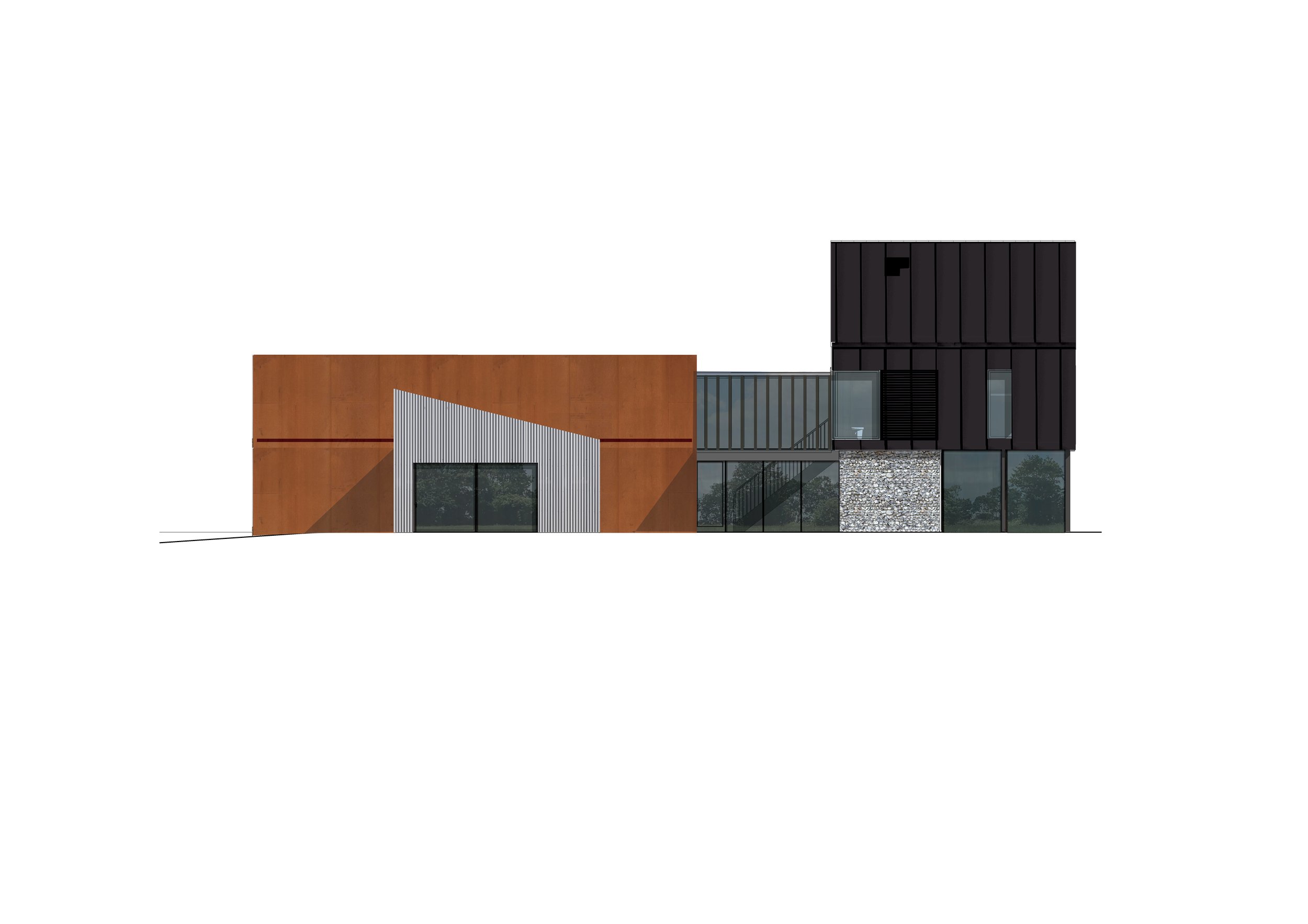
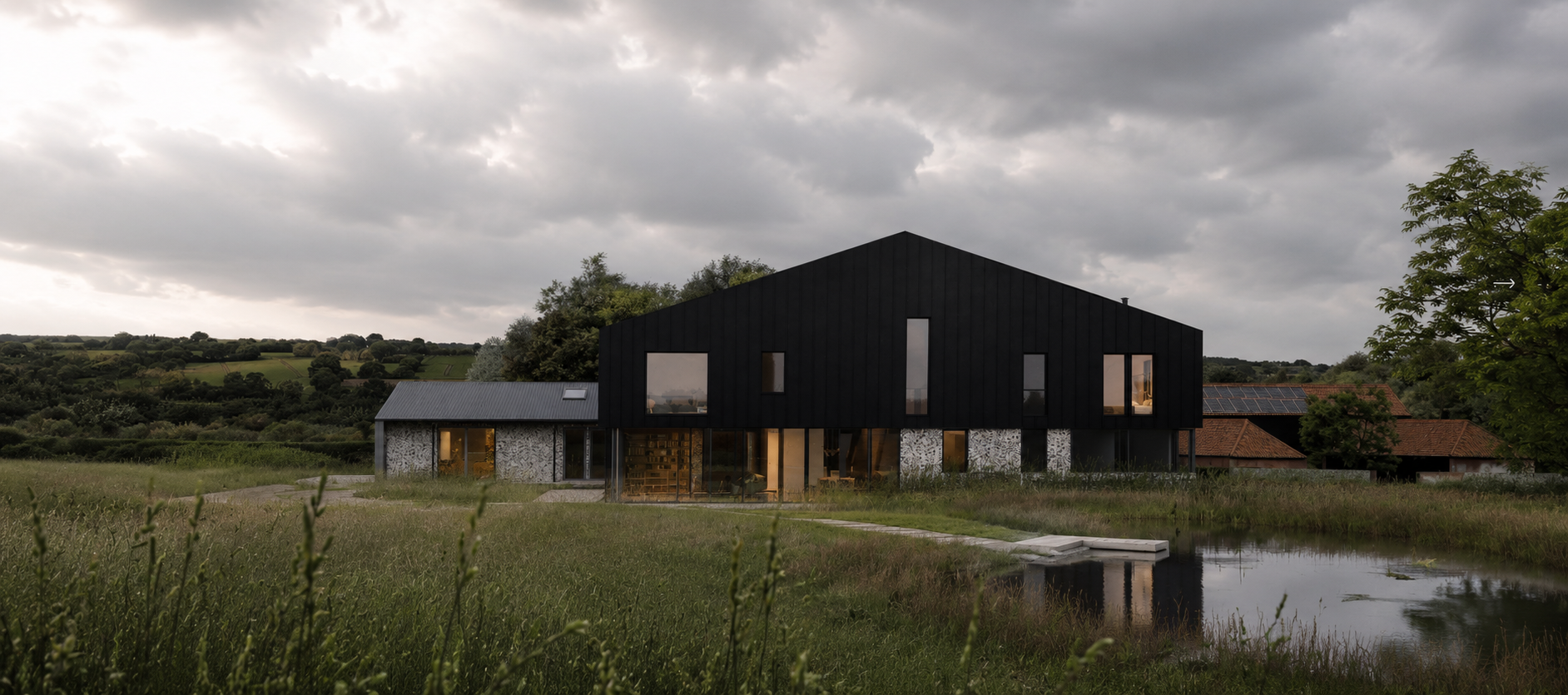
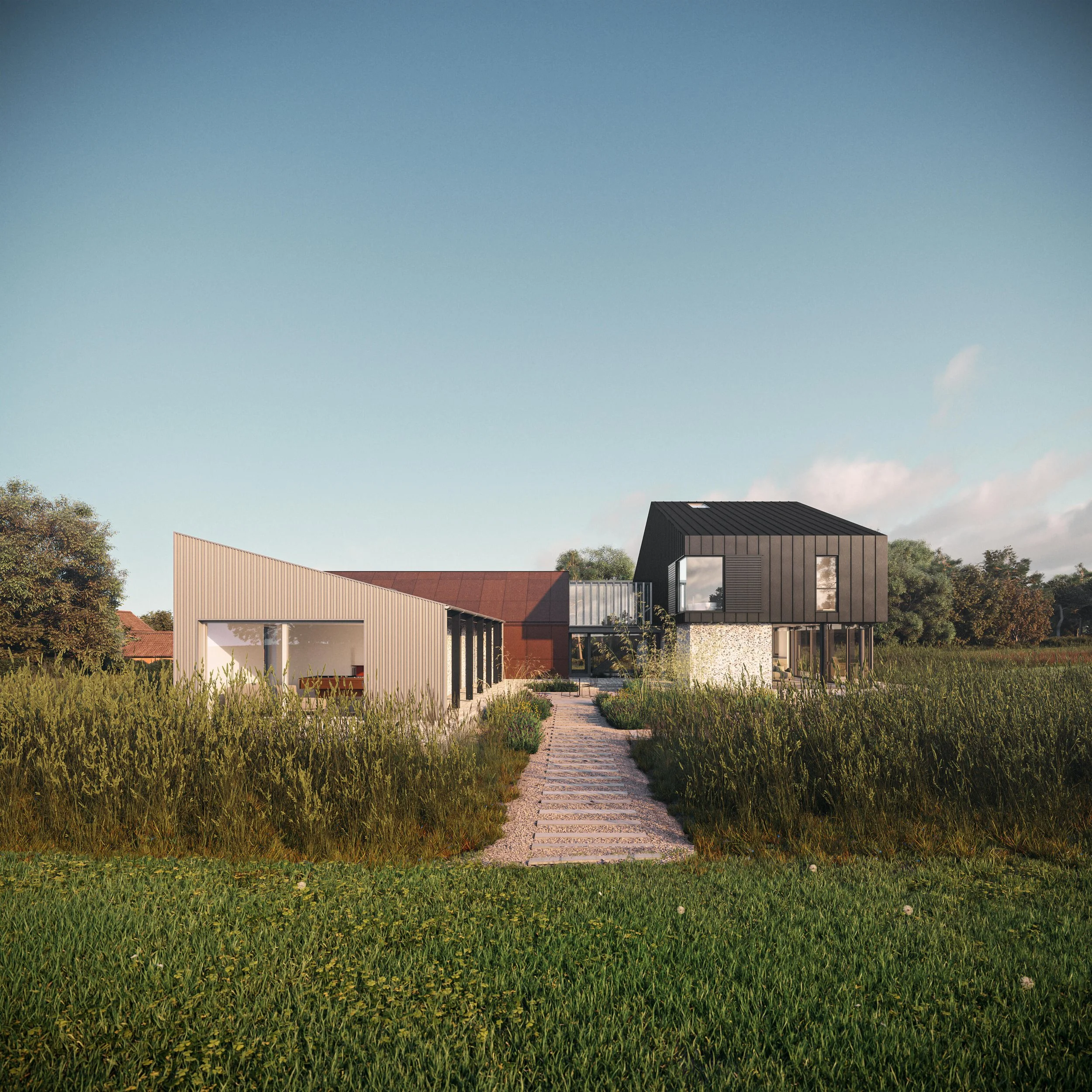
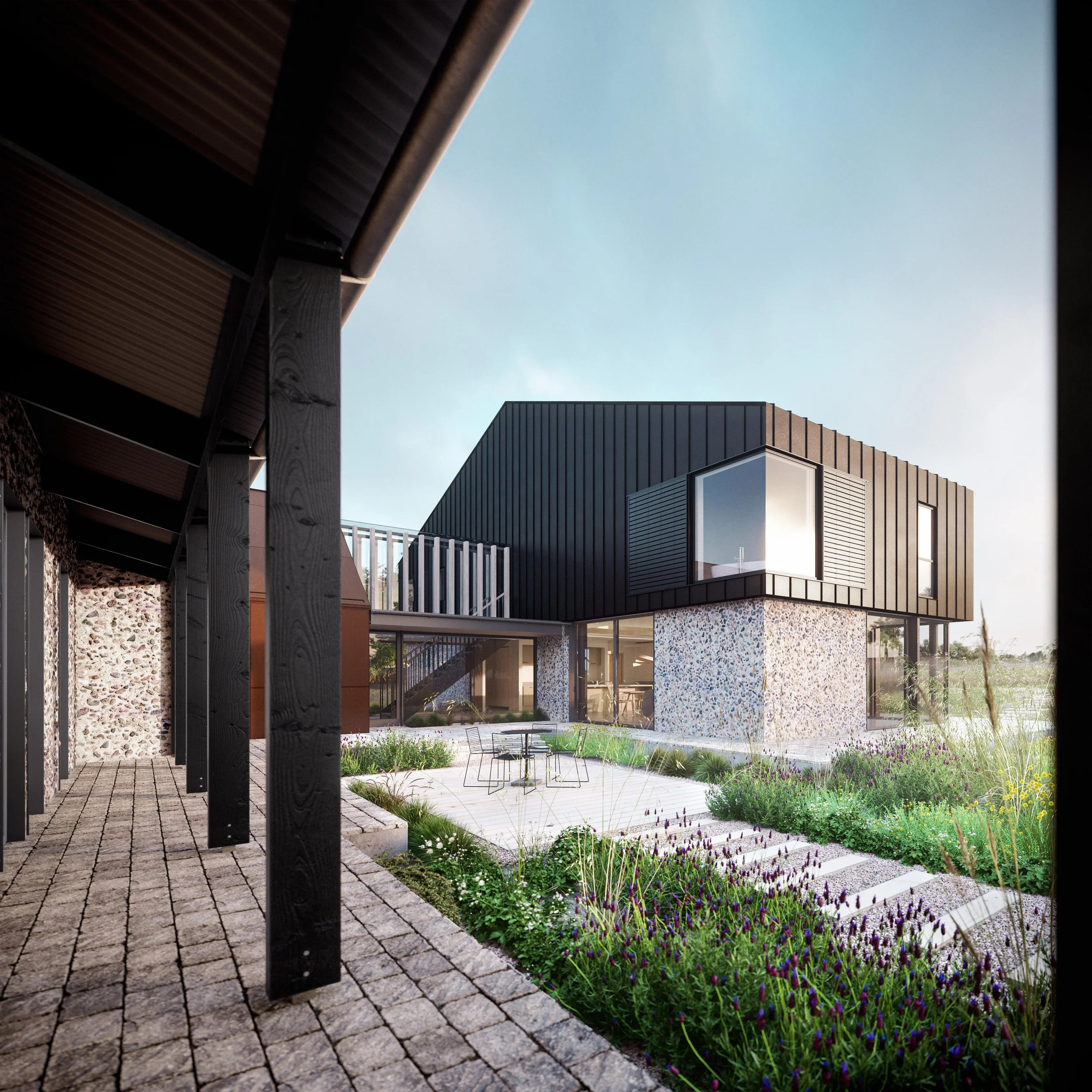
The architectural language draws strong contemporary references from the existing agricultural structures and their material palette, with the intention of reflecting the history and evolution of Bungalow Farm. The mono-pitched guest bedroom and games wing references the former piggery and is proposed to be clad in agricultural aluminium sheeting with an overhanging black-painted timber frame, referencing the existing corrugated roofing and traditional post-and-beam structures found on site.
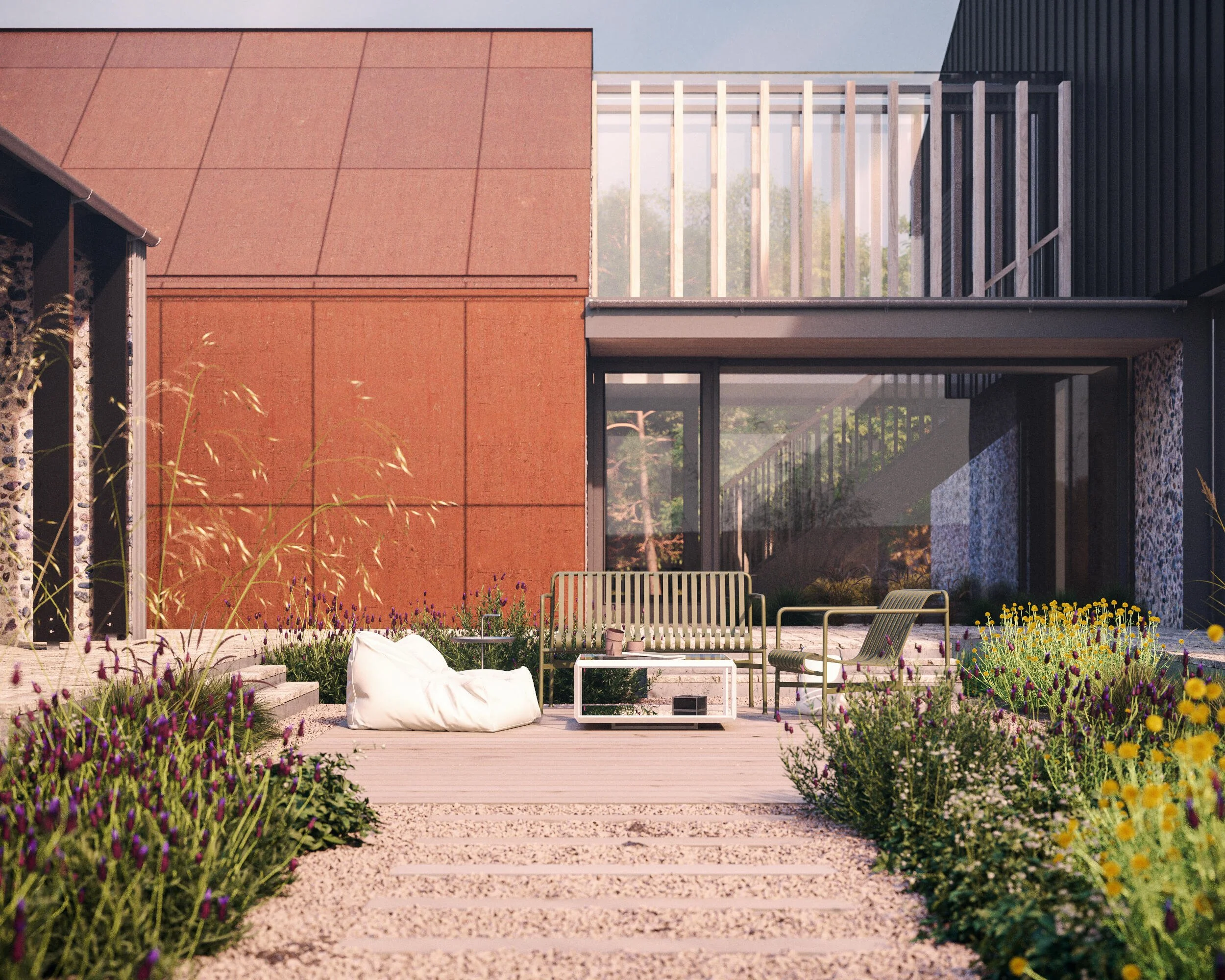
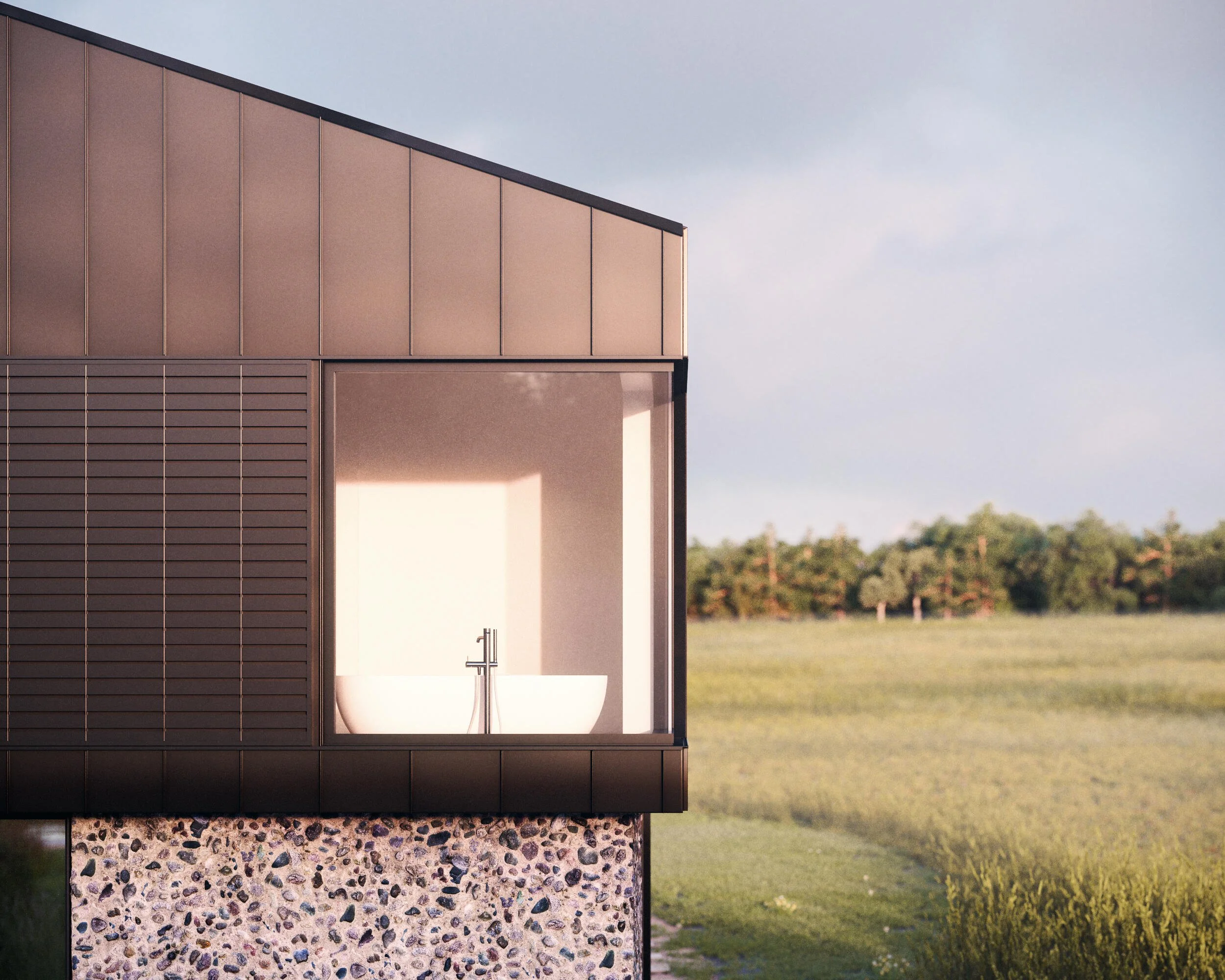
A flint plinth is proposed to utilise the abundance of field flint found across the site and to provide a grounding base for the black standing seam metal-clad upper volume. In conjunction with the Corten steel proposed to the utility and parking structure, the material palette references the evolving agricultural buildings of Suffolk, where traditional red oxide finishes often weathered and darkened over time through exposure and age.
The proposal demonstrates how contemporary architecture, biodiversity enhancement and rewilding strategies can work together to sensitively respond to challenging countryside sites while significantly enhancing the ecological value of the landscape.
Site & Design Narratives: The Bungalow, Barn & Piggery
The Proposal
Rewilding Strategy